Review of the Aoocci C3Plus Carplay device

I’ve been looking for an alternative to Garmin’s GPS universe for some time. The Garmin ecosystem seemed to be getting a little stale, with motorcycle equipment just one part of a huge range of (highly priced) devices, at the same time that Google Maps was becoming effortlessly reliable and useful – it really does save your previous searches etc. Added to that we have seen the development a number of moto-specific navigation apps designed for smartphone that should, in theory, transfer well onto Carplay. The particular app that I’ve signed up to is MyRouteApp.

My first attempt at escaping the Garmin ecosystem was trying, by which I mean spending an awful lot of money and selling again at a significant loss, a Thork Racing DMD T865 Android tablet. I didn’t get on with it for reasons I go into here.

When, as a result of some targeted promotional YouTube vids by the company that make Aoocci carplay units, I discovered one of these devices for less than £100, I was interested, like a lot of people. On their website the company claims to have been founded by a lone tech enthusiast working in his garage in HongKong. But there are many fake-origin stories put up by companies on the net, that its hard to know. (Run a Google image search on the photo of the ‘founder’ on some sites and you will often find that it is a stock photo used in a variety of other fake sites were the person in the photo is given different names.) Anyway, regardless, the company makes units that do no more than display your smartphone’s navigation and other selected apps on a small GPS-looking screen that you can fix in various places on your motorbike. I wouldn’t mind betting that many other buyers, like me, thought – if this turns out to be a pile of crap, I’ve only lost £80 or so…

So what is it like? So many of the sponsored promoters sing its praises.

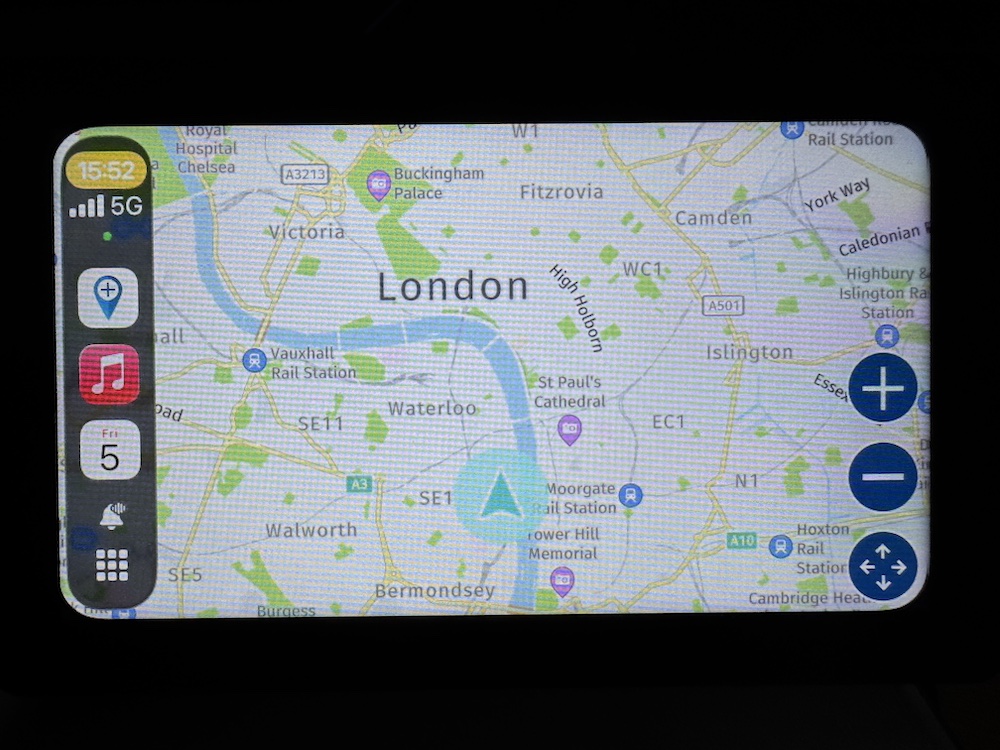
My version came only with wiring to hard-wire to the bike, in my case via a power distribution unit which made it simple for me. I would have connected it in that way anyway. The only problem was that without a usb connector for its proprietary connection you can’t experiment with it apart from when its connected to the bike and the bike turned on. And if things go wrong with the unit, as they did for me and, by the look of it, many other owners, you have to be able to plug it into a PC to update the firmware. Sorry no Macs – only clunky software for Windoze. Journey number 1: yes it works fine, using Google Maps – result. End of journey number 1: let’s connect it to the two supplied tyre pressure monitors – nice idea in theory – just to see how accurate it is. This is where the device stopped working for me and others. Updating its firmware is possible, and the company do have an update ready but its implementation is not straightforward though doable, eventually. So, back up and running let’s try again. The device starts up, works as before but seems to have gone off the idea of talking with the TPMS.

My second investigation was seeing how MyRouteApp would run via this device. Its smartphone implementation is good, though I have not used it because I have never mounted my iPhone on the bike. When connected to CarPlay I discovered that it has a limited usability. First here’s a screenshot from MRA on a smartphone. You can move the map around on the touchscreen nicely.
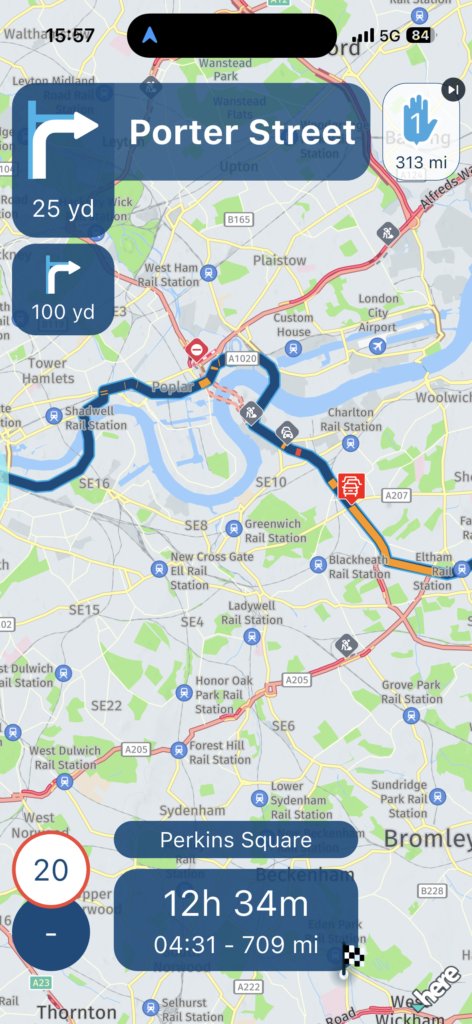
Now here is the implementation on the Aoocci device, using Carplay. The first screen shows my list of folders of routes I have previously plotted with MRA presented to me, the middle shot is what you see when you click on the search icon from the first MRA screen you see and the right-hand screenshot is the working map page from MRA. When you have Google Maps on the Aoocci screen you can move it around with your finger (if your gloves are not too thick) but with MRA you cannot move it. You have to tap on some direction arrows. This seems a limitation to me.
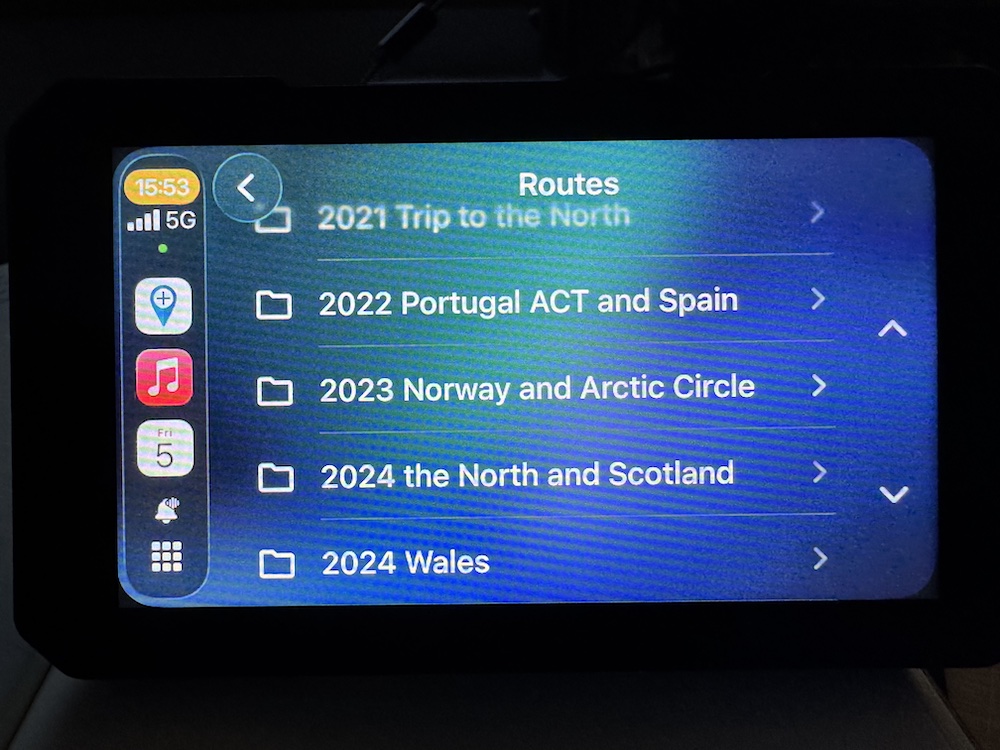
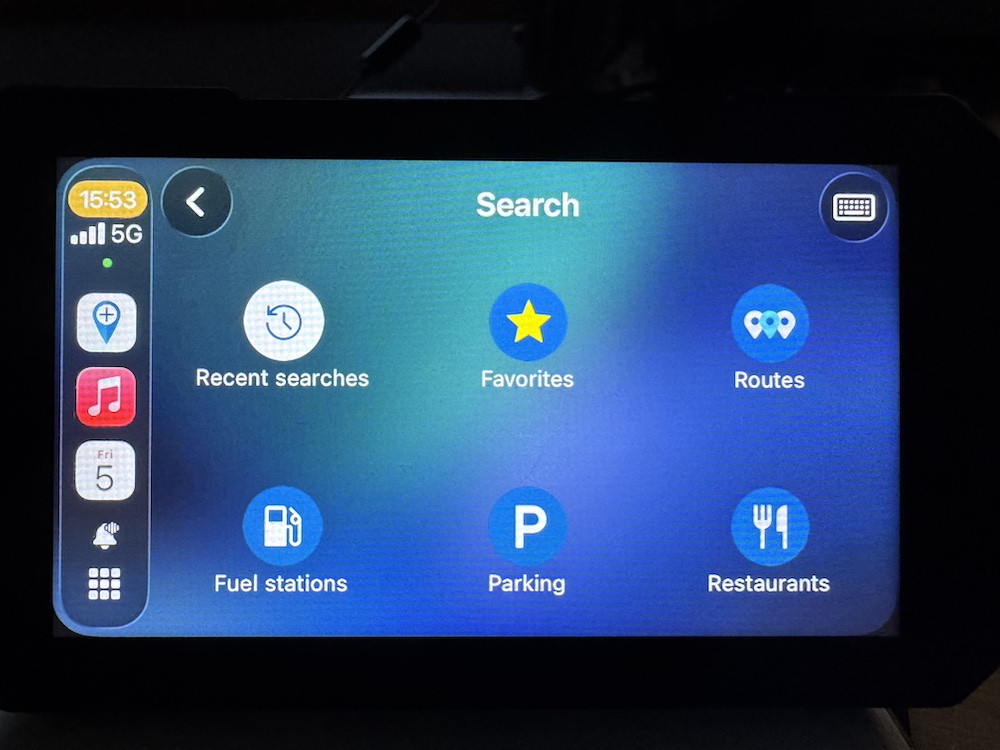
Obviously I like MRA’s ability to let you design a route quite simply and you could be guided by your smartphone. I am not sure how this is going to work using Carplay and the Aoocci device. I like the MRA ecosystem so want to persevere a little before trying something else.

I forgot to mention that I found the connection bracket that was supplied with the Aoocci unit was of limited use so I glued a RAM mount ball head that I had onto the back of the Aoocci mount and could fix it easily on an adjustable RAM mount.

I also forgot to say that perhaps the biggest discovery in this has been noise-cancelling Apple Earbuds (Pro 3 or similar). I have found that these do an amazing job of cancelling motorcycle and wind noise while allowing instructions from Google Maps to remain crystal clear. They fit very well under a helmet and don’t fall out when you take it off. The only slight downside, particularly when travelling and camping, is that they would be yet another thing to have to charge up at the end of the day.

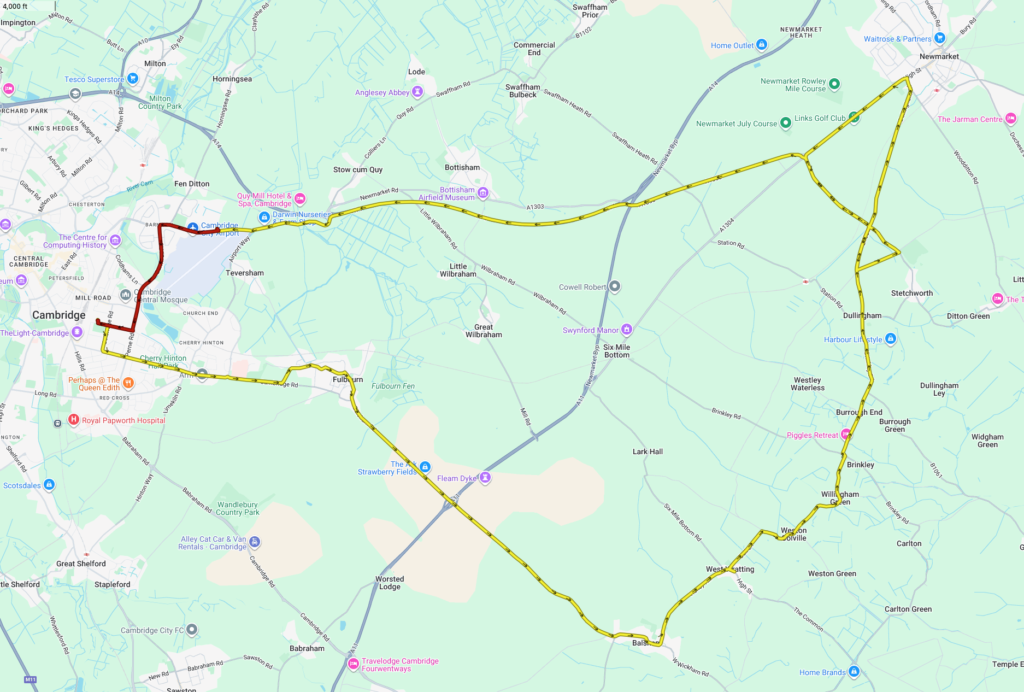
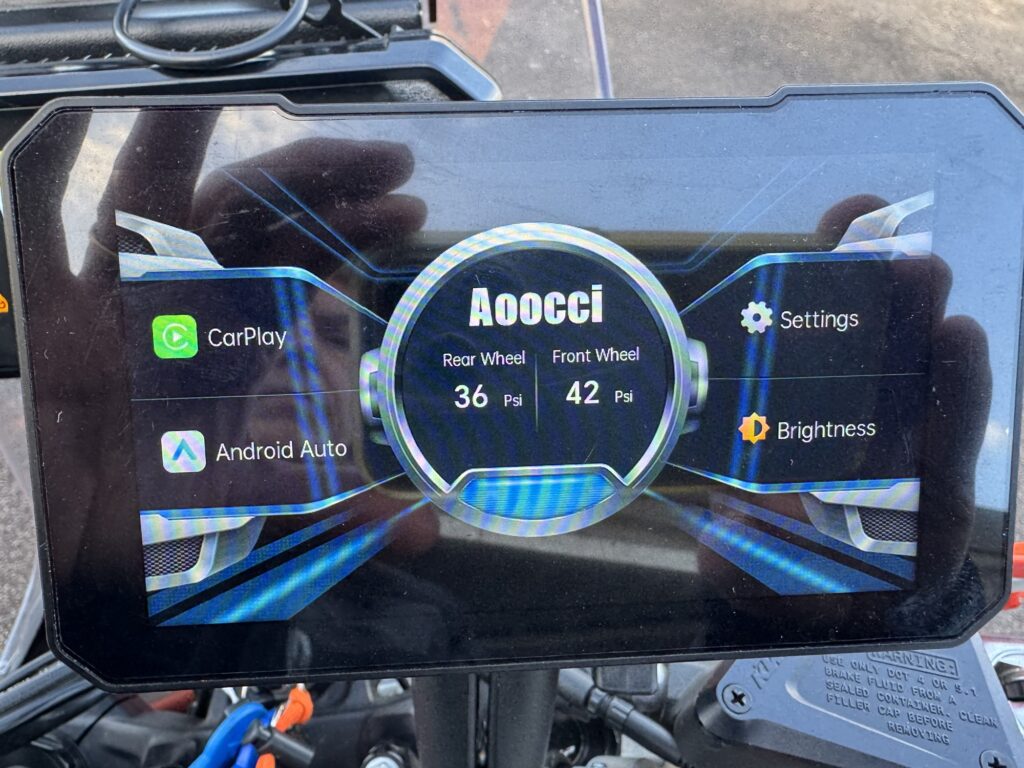
Update: now that I’ve tried using a route planned on MRA to navigate me on a thirty mile loop out to Balsham and Dullingham I feel a bit more positive about the set up and using MRA to navigate around a nice ride. All works well. It even makes a good effort to rescue you when you have gone off the route. The map is clear and the voice prompts are in good time. Once back I even managed to get Aoocci to read the tyre pressures though somehow they are the wrong way round. It showed me that my front tyre lost a lot of pressure – down to 18psi before I pumped it up again. I wonder what has happened to it.
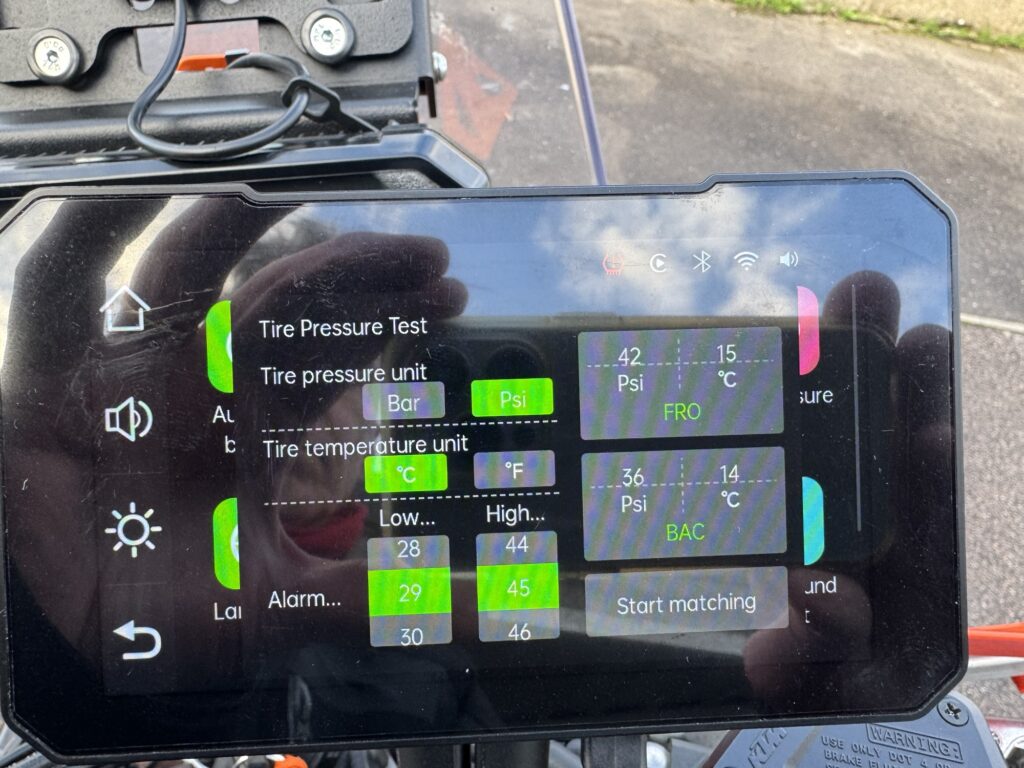
Accurate tyre pressures just the wrong way round

Also displayed on the start up screen
Staying on the land

Compared to some recent trips to faraway places, there is not that much to say about this short trip to stay in Suffolk. A few things were interesting:

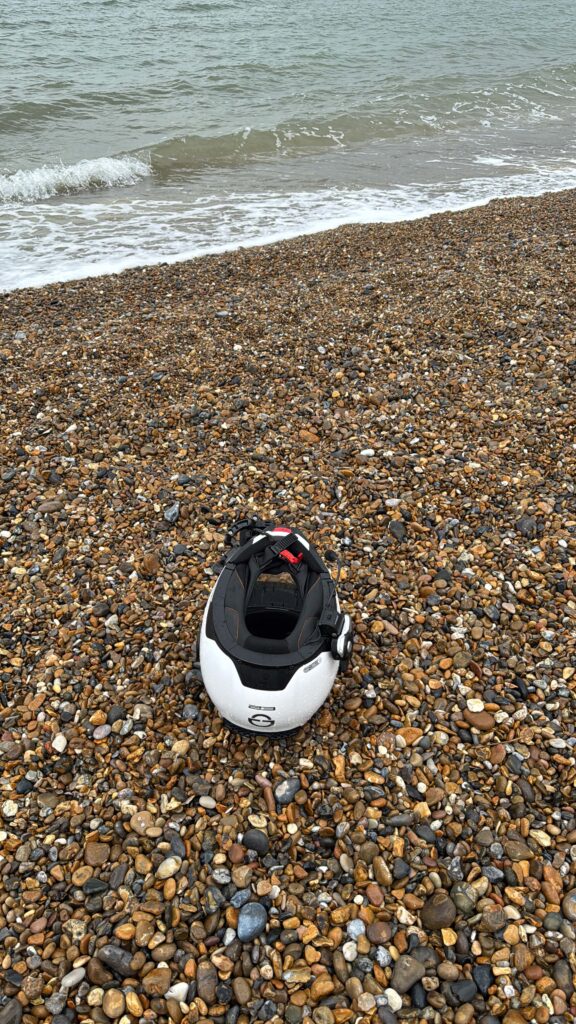
A ride over to Dunwich and Walberswick to swim in the sea. It was not a hot day – in fact it was raining when I first arrived – but the sea temperature was fine and it was also fine to leave my large pile of motorcycle clothes on the stoney beach while I took a dip.

helmet on the beach

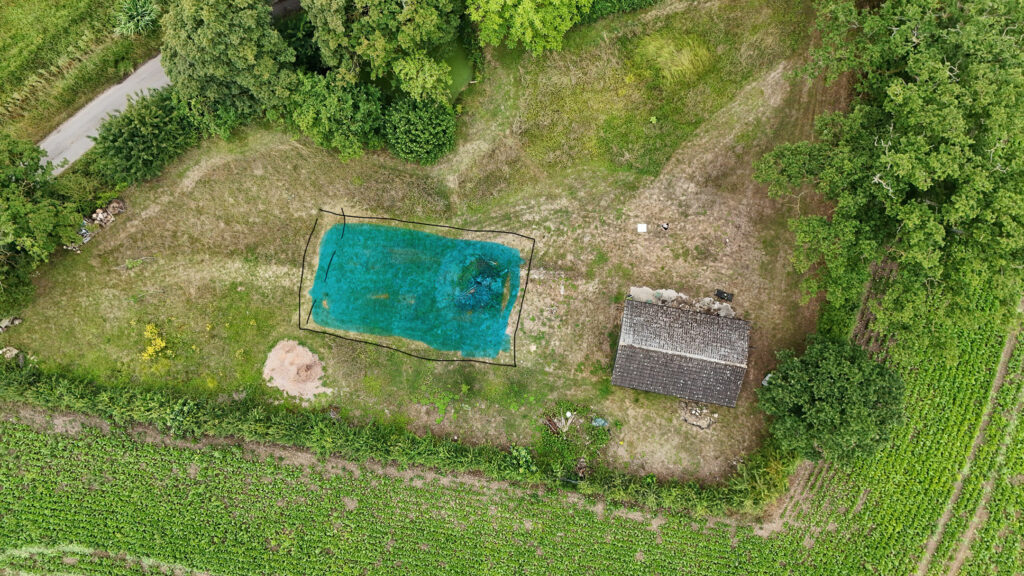
I bought a drone a few weeks before the trip to start to record any building work on the land from the air and to plan, and also record, progress – eventually – on digging and making a natural swimming pond. Here’s where it should go. It will be about 12 metres long.

blue marks the spot

Also on the topic of swimming, I made a point of revisiting the scene of my sudden realisation a few years back that I couldn’t swim. Beccles Lido. I rode over there and used their single dedicated parking spot for a motorcycle. I swam up and down with many others for half an hour or so and did not panic once – as I did all those years ago.

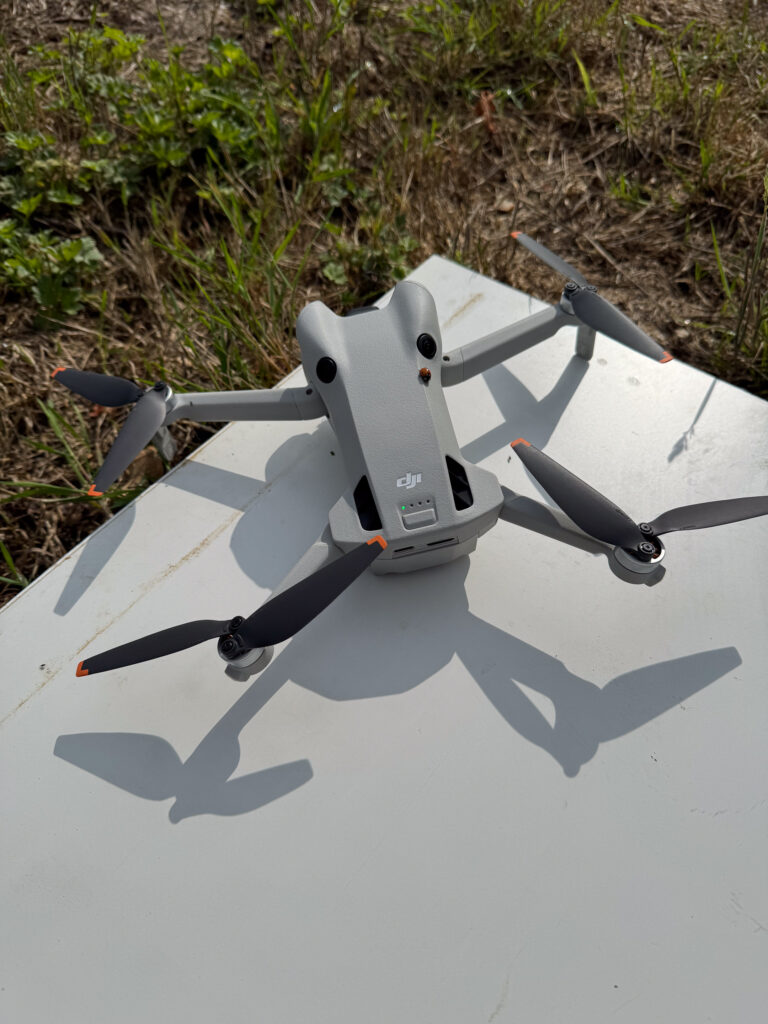
Here’s the drone: a DJI Mini 4 Pro – or some other combination of words. I’m happy with it but so far a useless and jerky flyer, I mean pilot. There is something breath-taking about that arial perspective. Its something about that human dream to be able to fly – like we do in dreams.

DJI drone

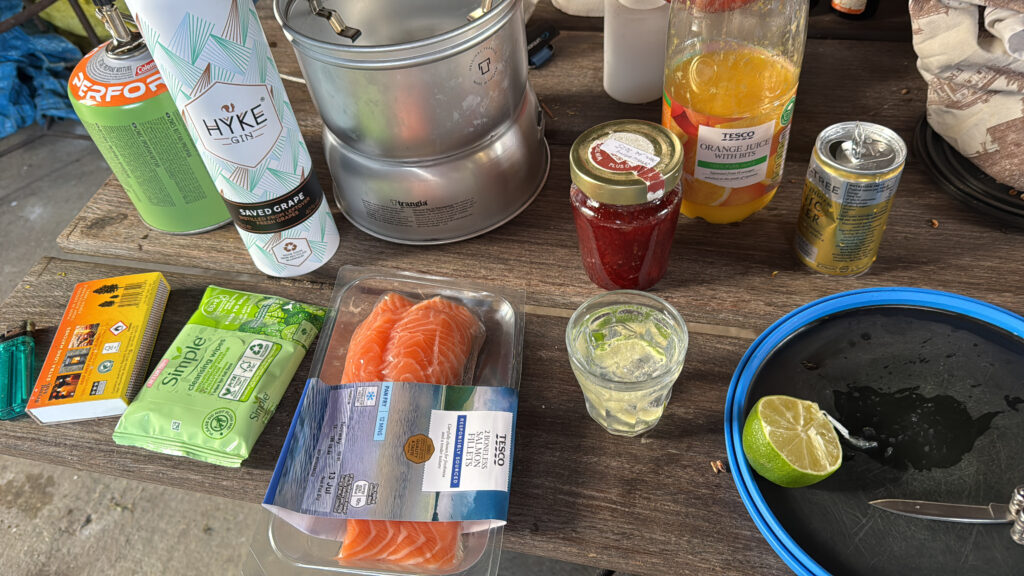
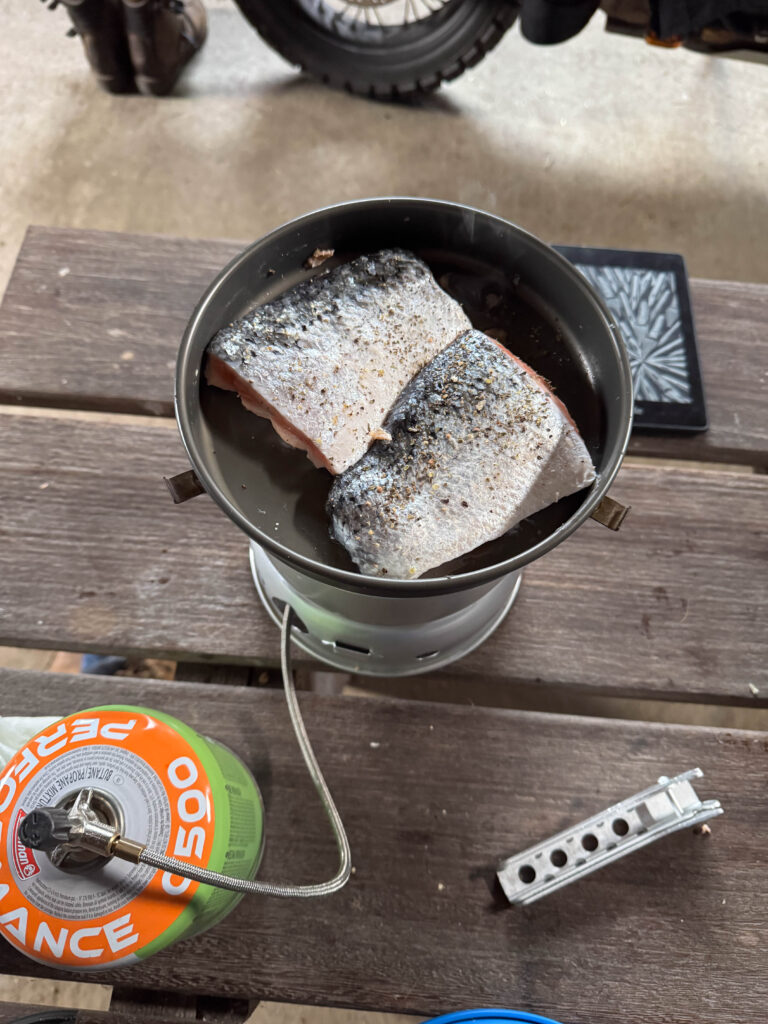
Tesco in Diss as usual provided my sustenance and drink. My method was to buy a bag of ice with each visit and rig up a hanging, temporary (until all the ice melts in a puddle on the floor) fridge to keep my meat, fish and white wine cold. I discovered some very nice new gin that came in a metal bottle.

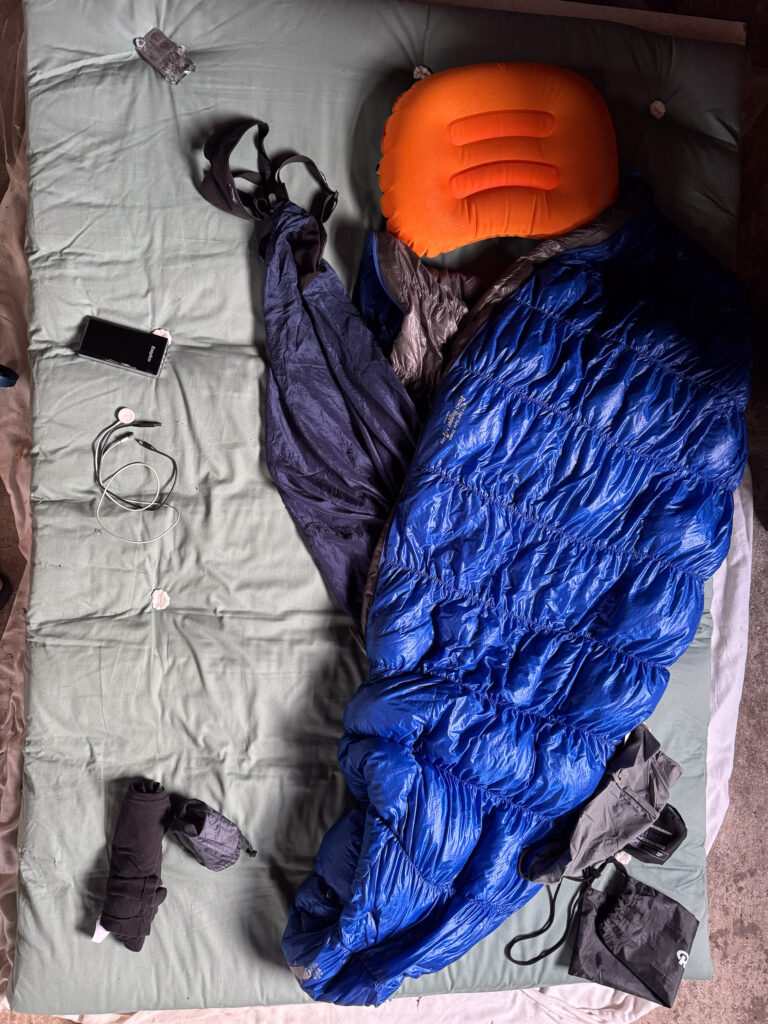
For a complicated reason I am storing a futon mattress in the barn and have discovered that it provides a much more comfortable night’s sleep than a sleeping mat in my narrow tent.

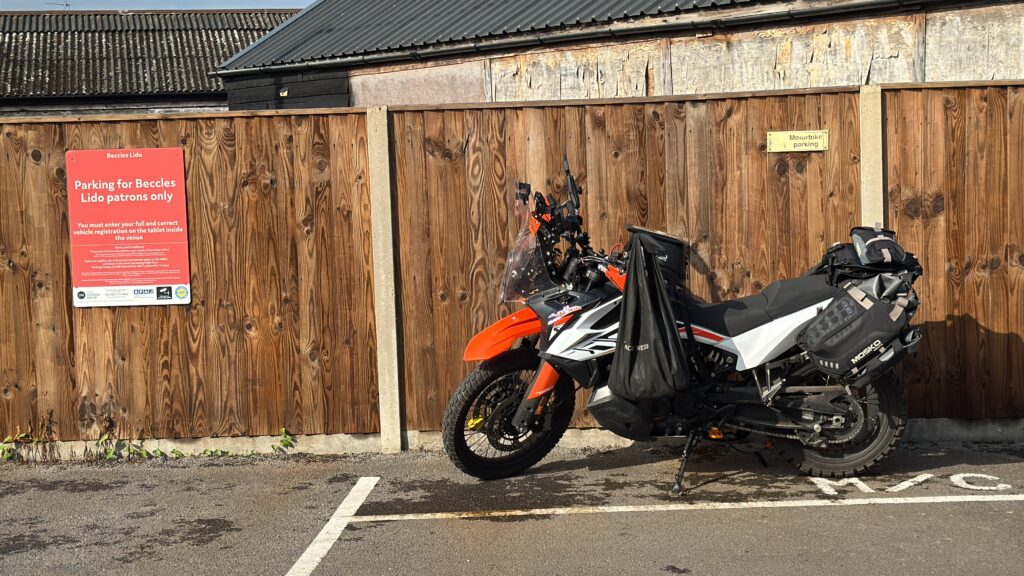
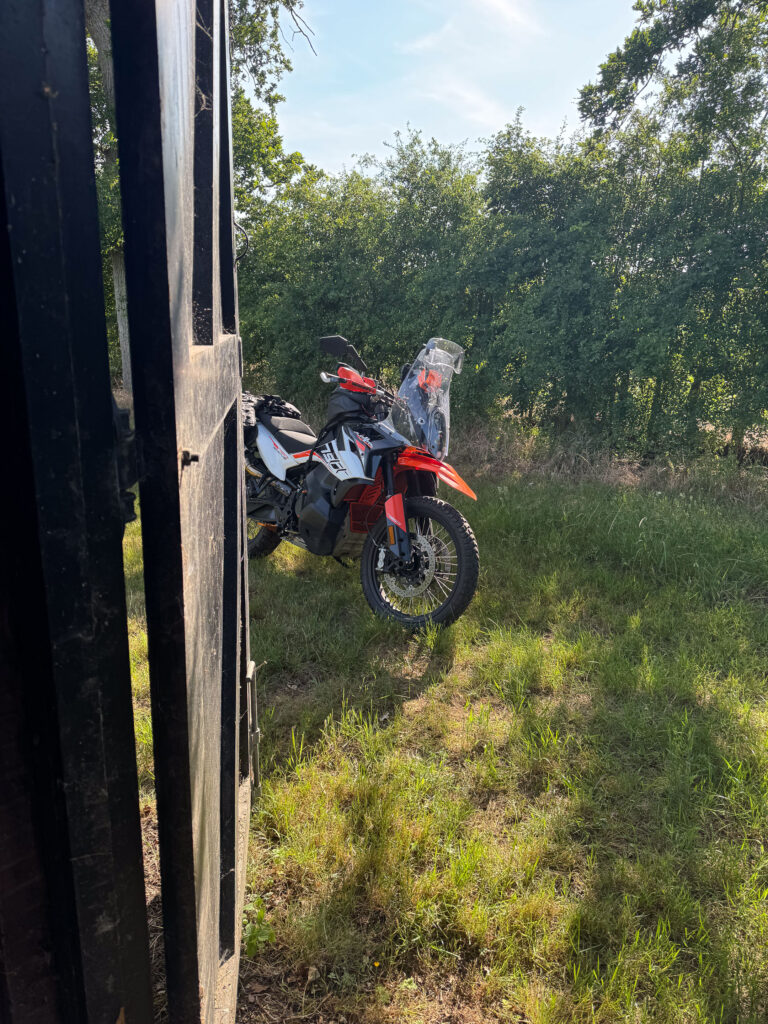
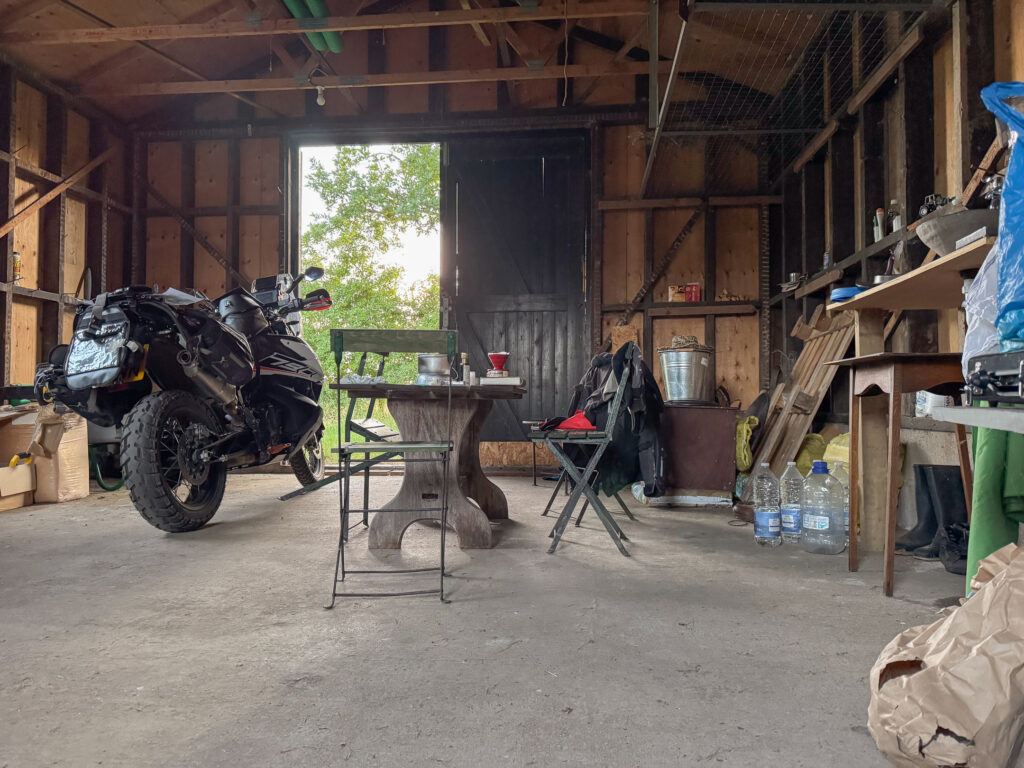
Finally, here’s my bike making an appearance.

KT peeking into the barn
KT at home in the barn

My motorcycle holiday 2025

Tomorrow I’m heading out for four nights on the land with some riding around Suffolk and Norfolk. I had been planning, and about to book, four or five nights in Scotland, around the borders and a forrest that I’d seen praised on biking websites. But then I realised that I could avoid spending two or more days of that trip riding up and down the A1 by going closer to home and still have enjoyable roads to ride, and a coast to visit. On balance, staying in the barn is more comfortable than camping. What it lacks in facilities (i.e. none) it makes up for in a comfortable futon mattress, privacy and a great space to spend time.

The only other downside is seeing all the work on the overgrown land that needs doing. We are hopefully not that many months from work starting on demolishing and rebuilding with lots of ground work so this could be one of the last chances to camp out there for a while. Weather is forecast to be mid twenties, a little cloudy and some rain tomorrow. I also have my newly bought drone to try out for the first time.

Review of Revit Sand 5 Gloves

In a world of largely online buying, some products seem ideally suited to remote purchase and some less so. Buying anything that needs to fit the body is hazardous, not only because all of our bodies and their many measurements, for example the length of our fingers, are different but because manufacturers’ sizing labels and systems also vary. When buying jeans we might turn up and the Levis store down town and take two sizes into the changing room, try one, then the other, then the first one again before making a decision about what to buy. Buying, say, motorcycling apparel from any of the online suppliers is far more hit and miss. It would be unusual to shell out on two pairs of armoured trousers (maybe costing £500 or £600 each), try them both on at home and return one of them. Most of us look carefully at the sizing advice and opt for the size that seems best – and when the much desired object turns up on the doorstep – perhaps a nice new crash helmet – we are probably hoping that we won’t have to defer our enjoyment and return it – not to mention the hassle of doing so. After buying a helmet that eventually turned out to be painfully too small (which I sold on eBay at a painfully large loss) and heated gloves that were also too tight and burned my knuckles (which I haven’t decided what to do with yet), I have promised myself that I would always buy this type of item in person. I have only partly succeeded.

The success part was my purchase of some hot weather gloves. I think global warming is having a significant effect both on motorcycling and on decisions about travel destinations more generally, though I don’t see the former talked about much. There are always uncomfortably hot days on most tours in Europe but a trip through Spain to Portugal a couple of years back took that discomfort into a potentially hazardous place where even expensive riding gear with all its clever vents could not protect me from the effects of heat exposure. And this must be more so for those riders who chose to travel further south, to Morocco for example. But even our generally miserable weathered UK is now dishing up many days of 30 degrees plus and if you unwittingly ride into one of those days you quickly discover that your normal riding gear is almost completely failing to protect you from the heat and is actually multiplying its ill-effects, apart from those stretches when you can ride at some speed and get some free ventilation. Last week was a day like this for me, innocently going on a couple of hours ride around Cambridge onto the fens. After half an hour or so, I realised that every part of me was too hot, my legs and my leather gloved hands particularly. My bike dash told me it was 31 degrees. As I am often looking for an excuse to search for new gear I decided to combat the personal impact of global warming in three ways: buy some new summer/hot weather gloves, some mesh trousers, and finally to dust off and get better armour for a Revit Air mesh jacket that I bought in 2010 and have barely worn since. Here are a few words about the gloves.

There is a huge choice of mesh, lightweight gloves. Some are very cheap, some expensive, some not intended for road use and some that are. There is rarely a glove that someone, somewhere has not given a bad review for – and when more than one person says, for example, that a particular glove tends to come apart at a particular place, then you have to cross that off the list. The one glove that no one seemed to complain about was the Revit Sand – version 5 glove. I like its looks and a non-black colour seems to make it feel cooler already.

I found a store in London, over in Fulham, that claimed to have all sizes in stock and jumped on the District line, along with a huge crowd of tourists travelling from Victoria to South Kensington, to find it. I had never heard of Urban Rider but the person working there told me they had been there for 18 years and had only recently branched out from catering for city riders into the expanding ‘adventure’ market, under the name, unsurprisingly of Adventure Rider.

The shop had an impressive stock, not just in the amount and choice but also in the brands they have chosen to sell – only, it seemed top quality brands like Klim, Belstaff and Revit. It was so good to confirm that XL really was my size in gloves, though these were designed with someone with slightly longer fingers than me.

So these Revit Sand 5 gloves fit and look good. But it will be a week or so before I get the chance to try them out though who can predict the weather? I’ll write more when I do.

The other bit of hot weather gear I bought is also made by Revit, their Rev’it Airwave 4 Textile Trousers – Anthracite. That’s another story.

Nikon Speedlight SB-24 in first use

One advantage of vintage gear is that everything associated with it is likely to be cheap, often very cheap meaning that you try things out that you wouldn’t normally consider. So, to my purchase of a Nikon F4, I have added a medium quality zoom lens Nikkor 28-105mm f3.5-4.5 AF-D (the review in the link pretty much confirms my own thoughts about the lens and its performance though I feel a little less generous – it only gets acceptably sharp after f5.6 and I would not describe its zooming action as at all smooth, nevertheless its a convenient lens to keep on the camera) – and today, just out of the box with fresh batteries, a Nikon Speedlight SB-24. This was a flash unit that was designed to work extremely closely with, specifically, the Nikon F4. It measures for the correct exposure through the lens during the exposure and as you change settings on the camera such as the aperture or the focal length of the lens the flashgun makes its own internal changes through its clever connections in the hotshoe. (it doesn’t seem to do any of this when fixed to a more modern Nikon like my D810 unfortunately). I’m yet to see the results of a few headshots that I’ve just taken, of course, until I finish the film and get it developed. Youtube offers some useful tutorials on the effect of various directions of pointing the flash head, along with the effect of fixing a white card to the top of the unit – which I have tried as seen in the picture here.

Upto now I have never been interested in using flash and most photographs that I have seen that do use it, even fill-in flash that is supposed to be subtle, have been the exact opposite of the kind of pictures that I am interested in taking. However, I can see that it is possible to use flash carefully and this speedlight/camera combination makes it particularly possible. My first assumption that you point a flash unit directly at (the face of) your subject was clearly (terribly) wrong – that’s why these units can tilt upwards and swivel from side to side of course – so that was my ignorance. I’m going to keep experimenting.

I’m expecting a waist level finder in the next week or so.

Two 1980s film cameras (Nikon-Pentax) compared today

Was it worth it to buy a new film camera when I had a perfectly good one in the drawer, one that I have owned since 1984? It was time for some comparisons. I put a roll of Tri-X through each and developed both films in exactly the same way. I scanned them with exactly the same equipment and settings though I might have made their curves a little different in Lightroom. I took some of the same subjects.

Pappenheim by Pentax

Pappenheim by Pentax ME Super (SMC 50mm f1.4) might have been shot at f2

Nikon F4 | Nikkor 50mm f1.4 AF-D | Tri-X Pan 400 Digitized with Nikon D810 | daylight Home developed in D76 | 6.75 mins | tank

The author photographed by Pentax

Nikon F4 | Nikkor 50mm f1.4 AF-D | Tri-X Pan 400 Digitized with Nikon D810 | daylight Home developed in D76 | 6.75 mins | tank

Bookshelf by Pentax

Nikon F4 | Nikkor 50mm f1.4 AF-D | Tri-X Pan 400 Digitized with Nikon D810 | daylight Home developed in D76 | 6.75 mins | tank

The images are very comparable and it takes a bit of magnification (more than you can do with these images here) to see that the Nikon seems to produce clearer, sharper images, possibly with more contrast though that could be a LR effect. What this comparison of a few images chosen from two rolls of 36 pictures does not show you is the completely out of focus shots that the Pentax produced, probably a good half dozen of those, plus a couple more where the exposure was wrong. The Nikon on the other hand did not drop a single shot. In terms of camera movement, neither of them compare with a modern camera with vibration reduction.

Above the contact from the Pentax

This is the Nikon